
7 Practical Ways to Improve Communication With Dementia Patients
How Families Can Build Understanding, Reduce Frustration, and Maintain Meaningful Connections
Communicating with dementia patients can become challenging as memory, language, and cognitive abilities change. A loved one who once enjoyed long conversations may begin repeating questions, struggling to find words, or becoming confused during everyday discussions.
Fortunately, simple changes in how families speak, listen, and respond can make conversations more comfortable and meaningful. In this article, we’ll explore seven practical strategies for talking to a loved one with dementia while preserving dignity, strengthening relationships, and supporting emotional well-being.
-
1. Speak Clearly and Keep Conversations Simple
One of the most effective ways of communicating with dementia patients is to use straightforward language and focus on one idea at a time.
Long explanations or several questions asked together can be difficult to process. Instead, speak calmly, use familiar words, and allow enough time for your loved one to understand.
For example, rather than asking, “Would you like to get dressed, have breakfast, and then go outside?” begin with, “Would you like to get dressed now?”
Simple communication reduces unnecessary confusion without treating an older adult like a child.
-
2. Maintain Eye Contact and Use Positive Body Language
Communication involves much more than spoken words. Facial expressions, gestures, posture, and tone of voice can communicate reassurance even when verbal understanding becomes difficult.
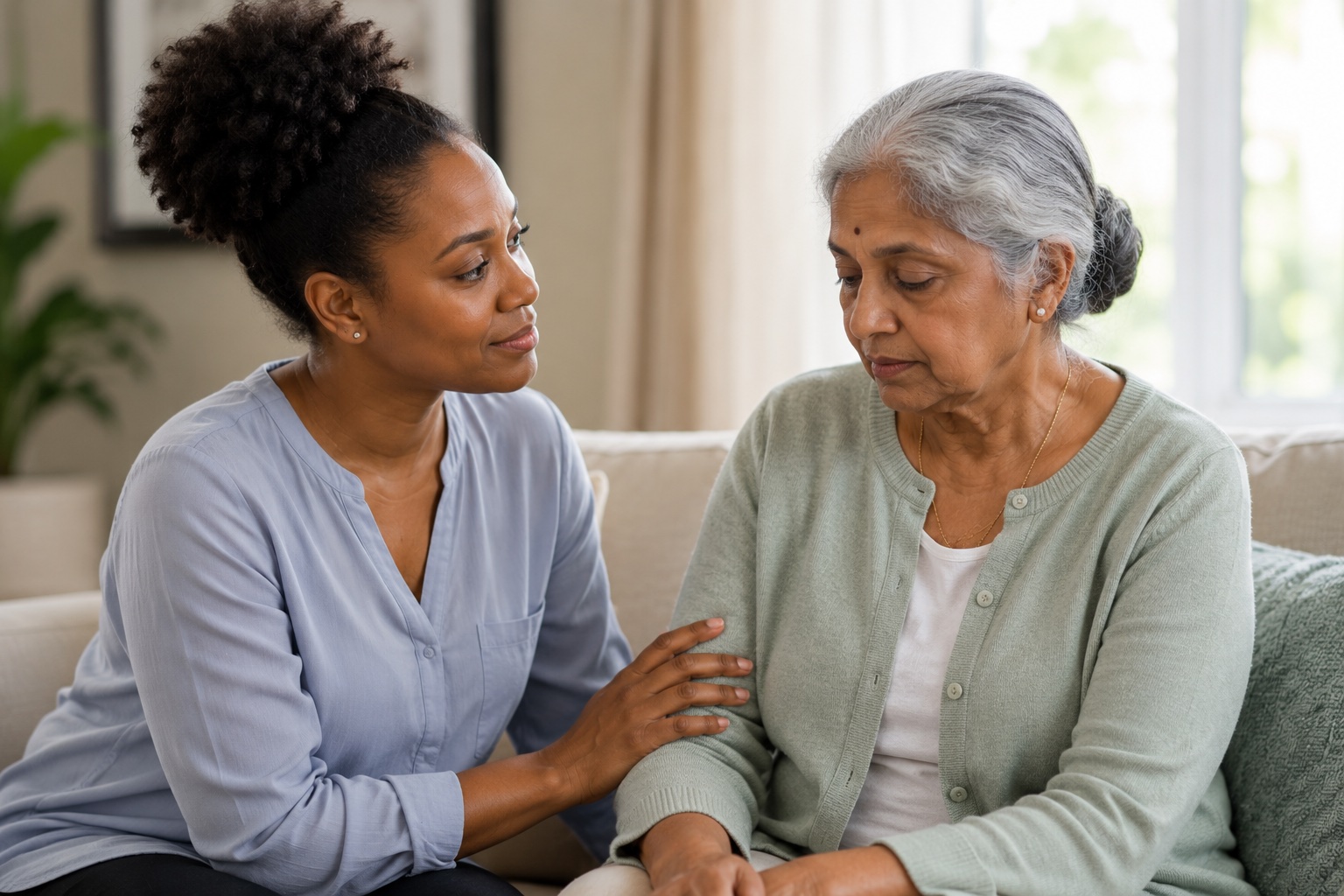
When communicating with dementia patients, approach them from the front, make comfortable eye contact, and speak at their level.
A warm smile or gentle touch, when welcomed, can help establish trust. Avoid standing over someone, appearing impatient, or raising your voice unnecessarily.
These small gestures help create a respectful environment where seniors feel acknowledged and included.
-
3. Practice Patience and Allow Extra Response Time
People living with dementia may need additional time to process questions, organize thoughts, or remember familiar words.
Interrupting or completing sentences too quickly can increase frustration and discourage participation.
Effective communicating with dementia patients requires patience, particularly when conversations move more slowly than they once did.
Give your loved one time to respond. If they struggle to find a word, offer assistance gently rather than immediately taking over.
The goal is meaningful interaction, not completing a conversation as quickly as possible.
-
4. Avoid Arguments and Focus on Emotional Reassurance
Memory changes sometimes cause seniors to recall events incorrectly, repeat concerns, or become confused about their surroundings.
Correcting every mistake rarely improves the conversation and may create unnecessary distress.
Instead, acknowledge the feelings behind what your loved one is saying.
For example, if your mother repeatedly asks when her parents are coming home, responding with reassurance and exploring what she needs emotionally may be more helpful than insisting on facts that upset her.
When communicating with dementia patients, compassion and emotional reassurance are often more valuable than winning an argument.
However, important safety concerns should always be addressed, and distressing beliefs may require professional guidance.
-
5. Reduce Background Noise and Distractions
Busy environments can make dementia communication tips difficult to apply successfully.
Televisions, competing conversations, loud music, and crowded rooms can overwhelm someone experiencing cognitive impairment.
Before beginning an important conversation, consider turning off the television, moving to a quieter room, and limiting interruptions.
This is especially helpful when discussing meals, medications, personal care, or daily activities.
A calm environment supports concentration and makes communicating with dementia patients easier for both seniors and caregivers.
-
6. Use Familiar Memories and Meaningful Activities
Although short-term memory may become impaired, familiar music, photographs, and activities can sometimes encourage engagement.
Looking through family albums, listening to favorite songs, or discussing meaningful experiences may create opportunities for connection.
Avoid turning these moments into memory tests. Instead of asking, “Do you remember who this is?” try saying, “This is your sister, Mary. You always enjoyed spending time together.”
These approaches support senior companionship while reducing pressure to recall specific details.
At Farmwood Senior Living, individualized senior care and meaningful daily activities are important parts of creating a comfortable, home-like environment for residents.
-
7. Adapt Communication as Dementia Progresses
Communication abilities often change throughout the different stages of dementia.
Someone in the early stages may participate comfortably in conversations but occasionally struggle with words. As cognitive impairment progresses, shorter sentences, visual cues, gestures, and nonverbal communication may become increasingly important.
Families should remain flexible and adjust their approach to match their loved one’s abilities.
Successful communicating with dementia patients also means recognizing when additional support may be beneficial.
Professional dementia care can help families address changing communication needs while supporting personal care, daily routines, and emotional well-being.
The National Institute on Aging provides additional guidance on communication changes associated with Alzheimer’s disease.
When Communication Challenges Signal a Need for Additional Care
Occasional difficulty finding words does not automatically mean a senior requires assisted living.
However, increasing confusion, difficulty expressing basic needs, agitation, or problems following essential instructions may indicate that additional support is necessary.
Sudden or rapidly worsening confusion should be evaluated promptly by a healthcare professional rather than assumed to be normal dementia progression.
Families should consider whether their loved one can communicate discomfort, participate safely in daily activities, and receive appropriate supervision.
At Farmwood Senior Living, our dementia care and Alzheimer’s care services emphasize compassionate attention, personalized support, and a familiar residential environment.
Compassionate Dementia Care in Mint Hill and Charlotte, NC
Communicating with dementia patients becomes more manageable when families understand how cognitive changes affect everyday conversations.
Patience, clear language, emotional reassurance, and thoughtful adjustments can help preserve meaningful relationships throughout the dementia journey.
Farmwood Senior Living provides personalized senior care in Mint Hill and Charlotte, NC, including specialized support for individuals living with dementia and Alzheimer’s disease.
If your family is exploring additional support for a loved one, contact Farmwood Senior Living at 704-222-9483 to learn more about our compassionate, home-like approach to senior care.
Our Locations
Mint Hill: 7301 Canterway Drive Mint Hill, NC 28227
Charlotte: 8110 Ottawa Lane Charlotte NC 28227

Ready to get started?
Personalized Senior Assisted Living and Care
Farmwood Senior Living provides quality senior care in a loving, family-friendly environment or at your private home through our home care service. Please contact us today to find out all we have to offer.