Meaningful Activities for Seniors With Dementia
Ideas That Encourage Engagement
Finding enjoyable activities for seniors with dementia can make a meaningful difference in their daily lives. Although memory loss and cognitive changes may affect familiar routines, older adults can continue participating in experiences that bring comfort, enjoyment, and a sense of purpose.
The most effective activities are often simple, familiar, and adapted to an individual’s abilities. Whether someone enjoys music, gardening, conversation, or creative projects, meaningful engagement can help maintain social connections and support emotional well-being.
Understanding how to choose appropriate activities for seniors with dementia can help families create more positive experiences while respecting their loved one’s changing needs.
Why Meaningful Activities Matter for Seniors With Dementia
Dementia affects memory, reasoning, communication, and the ability to complete everyday tasks. However, these changes do not eliminate a person’s desire for companionship, enjoyment, or independence.
Thoughtfully selected activities for seniors with dementia can provide opportunities for:
- Maintaining social connections and reducing isolation.
- Encouraging movement and gentle physical activity.
- Supporting attention and cognitive engagement.
- Providing emotional comfort through familiar experiences.
- Preserving a sense of identity, accomplishment, and purpose.
Activities do not need to be complicated or challenging to be beneficial. In many cases, the enjoyment comes from participating rather than completing a particular task.
1. Music and Familiar Songs
Music can be especially meaningful for individuals experiencing memory loss. Familiar melodies may encourage singing, gentle movement, or emotional connection, even when verbal communication becomes difficult.
Playing favorite songs from earlier decades, listening to familiar hymns, or enjoying music together can create opportunities for interaction.
When choosing activities for seniors with dementia, consider music associated with positive memories. Observe the person’s response, since certain songs or sounds may occasionally cause discomfort.
2. Looking Through Family Photos
Photographs provide opportunities for conversation, storytelling, and reminiscing about meaningful life experiences.
Families can create a small photo album featuring familiar relatives, childhood memories, pets, or favorite destinations.
Rather than testing someone’s memory by asking them to identify people or events, encourage relaxed conversations.
For example, saying, “This looks like a wonderful family gathering,” may feel more comfortable than asking, “Do you remember who everyone is?”
These simple interactions can support emotional connection without creating unnecessary pressure.
3. Gardening and Nature Activities
Spending time outdoors can provide fresh air, gentle movement, and enjoyable sensory experiences.
Some appropriate activities for seniors with dementia include watering flowers, arranging potted plants, observing birds, or enjoying a supervised walk through a garden.
For individuals with limited mobility, indoor gardening or arranging flowers at a table may provide similar enjoyment.
Choose safe, accessible spaces and supervise activities according to the person’s mobility, judgment, and care needs.
4. Simple Arts and Crafts
Creative activities offer opportunities for self-expression without requiring complicated instructions.
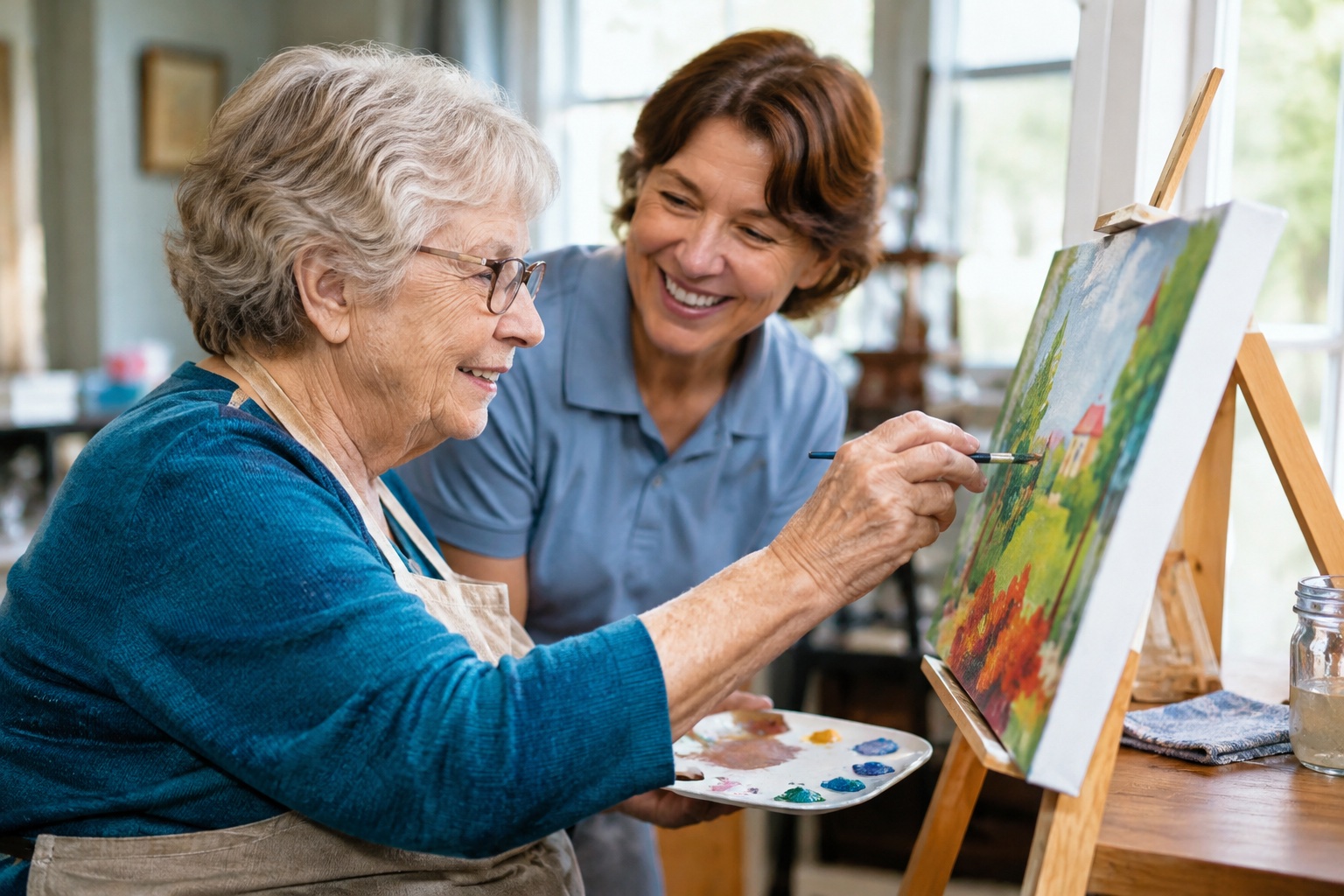
Coloring, painting, arranging flowers, or making seasonal decorations can encourage participation and provide a sense of accomplishment.
The key is choosing projects that match the individual’s abilities.
For example, someone who previously enjoyed sewing may appreciate sorting colorful fabric pieces or helping select materials for a simple craft.
Avoid activities that require excessive concentration, complicated steps, or potentially hazardous supplies.
5. Familiar Household Tasks
Everyday household activities can provide a reassuring sense of purpose.
Folding towels, matching socks, organizing greeting cards, or helping set a table may feel familiar and satisfying.
These activities for seniors with dementia can be particularly helpful when someone enjoys staying busy or participating in family routines.
The goal is not productivity. Instead, it is helping the individual feel included, capable, and valued.
Caregivers should offer encouragement while allowing the person to participate at a comfortable pace.
6. Gentle Exercise and Movement
Physical activity can support mobility, flexibility, and general well-being when adapted to an individual’s health and abilities.
Suitable options may include short supervised walks, seated stretching, simple chair exercises, or gentle movements accompanied by music.
Before beginning a new exercise routine, families should consider medical conditions, balance difficulties, and recommendations from healthcare professionals.
Activities should never create unnecessary fatigue or increase the risk of falling.
How to Adapt Activities as Dementia Progresses
Choosing activities for seniors with dementia requires flexibility because cognitive and physical abilities can change over time.
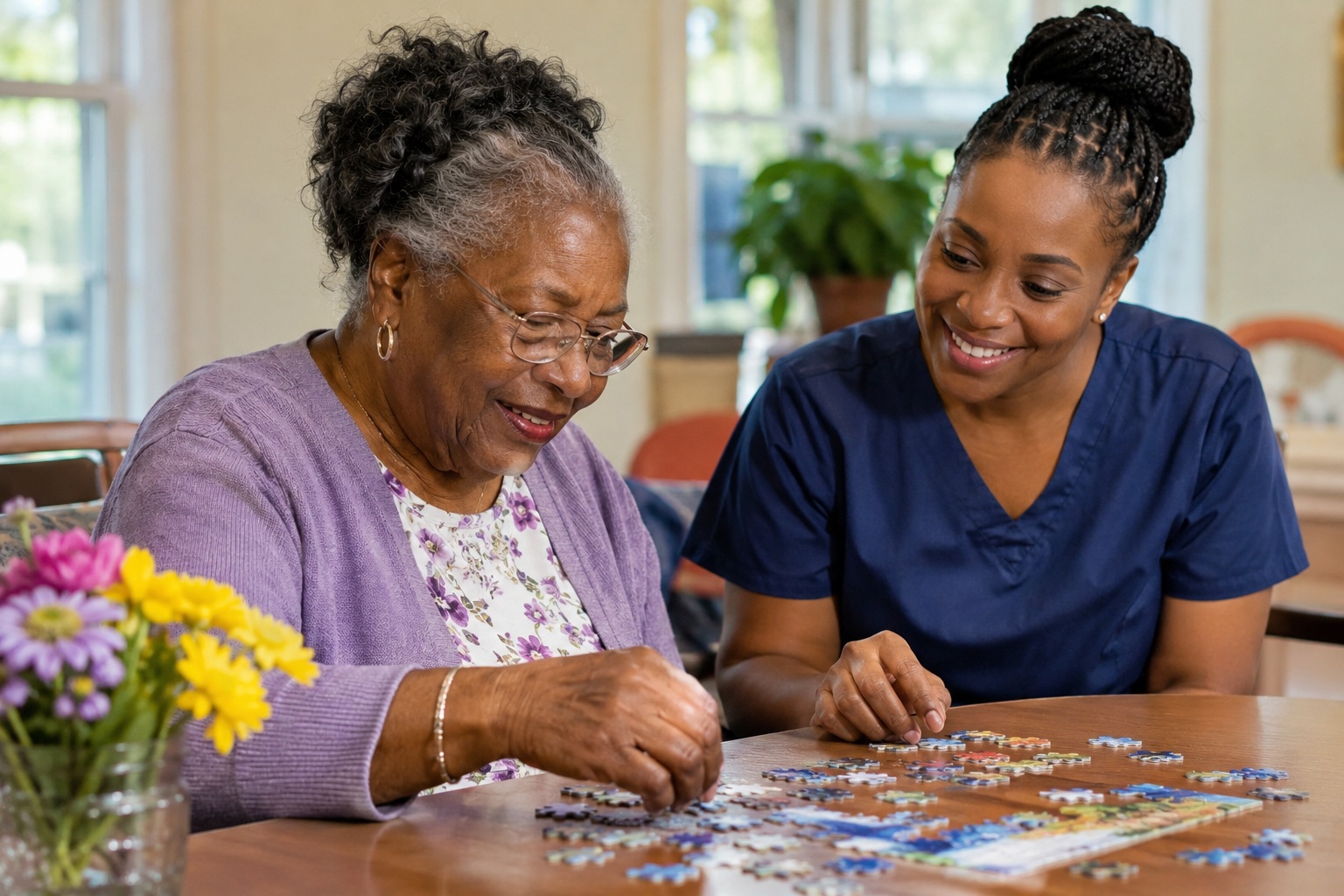
During earlier stages, individuals may enjoy familiar hobbies, simple games, gardening, or social gatherings.
As dementia progresses, shorter activities with fewer instructions may become more appropriate. Listening to music, holding familiar objects, or enjoying gentle sensory experiences may provide comfort.
For individuals with advanced dementia, calm companionship, familiar sounds, and simple sensory engagement may be more suitable than structured tasks.
Caregivers should watch for signs of frustration, fatigue, or overstimulation and adjust accordingly.
Creating a Comfortable Daily Routine
Consistency can make meaningful engagement easier.
Offering activities at familiar times, reducing background distractions, and allowing frequent breaks can help create a more relaxed environment.
Families should also remember that preferences vary. An activity that one person enjoys may not appeal to another.
At Farmwood Senior Living, individualized care is an important part of supporting residents with dementia and Alzheimer’s disease. Familiar routines, personalized attention, and compassionate caregivers help create a comfortable, home-like environment.
Families seeking dementia care in Mint Hill or Charlotte, NC, can benefit from understanding how daily engagement fits into a broader care plan.
Supporting Quality of Life Through Meaningful Engagement
The best activities for seniors with dementia are not necessarily the most elaborate. They are the experiences that encourage comfort, connection, participation, and enjoyment.
By focusing on familiar interests, adapting expectations, and respecting individual preferences, families can create meaningful moments throughout the different stages of dementia.
Farmwood Senior Living provides compassionate dementia care and personalized senior care in Mint Hill and Charlotte, North Carolina. If your loved one needs additional assistance, contact Farmwood Senior Living to learn how its supportive, home-like care environment can help meet their changing needs.
Frequently Asked Questions
-
1. What are the best activities for seniors with dementia?
The best activities for seniors with dementia are familiar, enjoyable experiences adapted to their abilities. Listening to music, looking through photographs, gardening, simple crafts, and gentle exercise can encourage engagement while providing opportunities for comfort and social connection.
-
2. How do you keep someone with dementia entertained?
Keep someone with dementia engaged by offering simple activities that reflect their interests and previous hobbies. Familiar music, photographs, supervised walks, and everyday household tasks can provide meaningful experiences. Avoid overly complicated instructions or activities that create frustration.
-
3. Can activities help slow the progression of dementia?
No specific activity has been proven to stop or reverse dementia progression. However, appropriate physical, social, and mentally engaging activities may support overall well-being, maintain abilities, and improve quality of life. Families should discuss suitable activities and care recommendations with healthcare professionals.
-
4. What activities are appropriate for someone with advanced dementia?
Activities for advanced dementia should emphasize comfort, familiarity, and gentle sensory engagement. Listening to favorite music, holding familiar objects, looking at photographs, and spending quiet time with loved ones may provide reassurance. Activities should be adapted to the person’s responses, mobility, and communication abilities.
-
5. How often should seniors with dementia participate in activities?
Seniors with dementia can benefit from opportunities for meaningful engagement throughout the day, depending on their abilities, preferences, and energy levels. Short, enjoyable activities may be more effective than lengthy sessions. Caregivers should provide breaks and adjust activities whenever signs of fatigue or frustration appear.
Our Locations
Mint Hill: 7301 Canterway Drive Mint Hill, NC 28227
Charlotte: 8110 Ottawa Lane Charlotte NC 28227

Ready to get started?
Personalized Senior Assisted Living and Care
Farmwood Senior Living provides quality senior care in a loving, family-friendly environment or at your private home through our home care service. Please contact us today to find out all we have to offer.