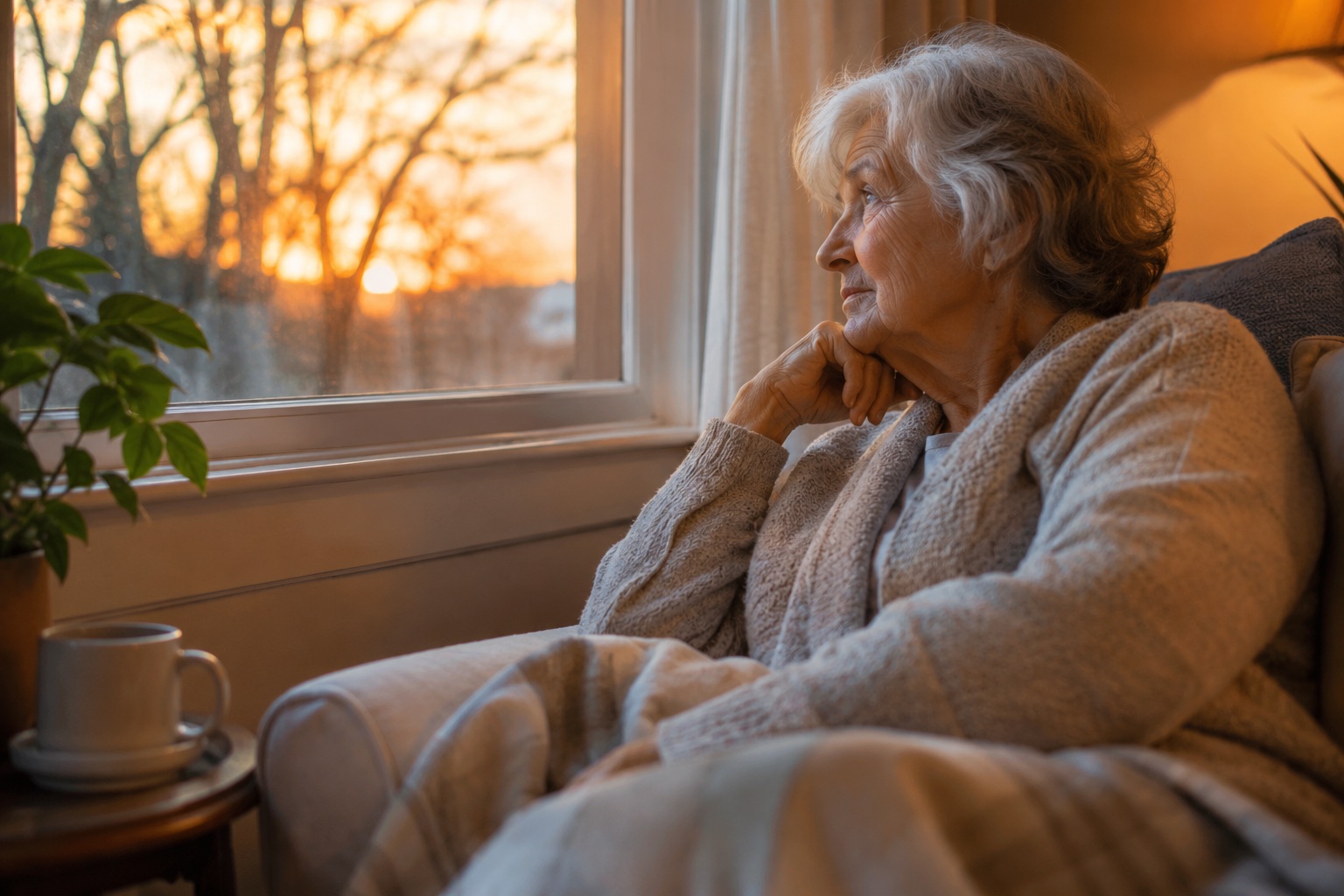
What Is Sundowning in Seniors With Dementia?
Signs, Causes, and Ways to Help
Watching an aging parent become increasingly confused, restless, or anxious as evening approaches can be concerning, especially when they seemed comfortable earlier in the day. These changes may be associated with a condition commonly called sundowning.
Sundowning in seniors is a pattern of increased confusion, agitation, or behavioral changes that typically occurs during the late afternoon or evening, particularly among individuals living with dementia or Alzheimer’s disease.
Understanding the symptoms, possible causes, and practical ways to respond can help families create a calmer, safer environment for their loved ones.
What Is Sundowning in Seniors?
Sundowning in seniors, sometimes called sundowner’s syndrome, describes a group of behavioral symptoms rather than a separate medical disease.
People experiencing sundowning may become more confused, anxious, or restless as daylight fades. These behaviors can continue into the evening or nighttime hours.
Although sundowning is frequently associated with Alzheimer’s disease and other forms of dementia, not everyone with dementia experiences it.
The severity and frequency of symptoms can also vary considerably from one individual to another.
Common Signs and Symptoms of Sundowning
Recognizing the symptoms of sundowning in seniors can help families respond before confusion or distress becomes more difficult to manage.
Common sundowning symptoms include:
- Increased confusion: Difficulty recognizing familiar surroundings, understanding conversations, or keeping track of time.
- Restlessness: Repeatedly walking around, pacing, or having difficulty sitting comfortably.
- Anxiety or fear: Becoming unusually worried, suspicious, or uncomfortable without an obvious explanation.
- Irritability: Showing frustration or agitation during otherwise familiar activities.
- Sleep disturbances: Having difficulty falling asleep, staying asleep, or maintaining a consistent sleep schedule.
- Repeated questions: Asking the same questions frequently or expressing concern about where family members are.
For example, an older adult may enjoy a peaceful afternoon but become increasingly concerned about going home as evening approaches, even while sitting in their own living room.
What Causes Sundowning in Seniors?
The exact causes of sundowning in seniors are not fully understood. However, several factors may contribute to late-day confusion and behavioral changes.
Changes in the Body’s Internal Clock
Dementia can affect the body’s circadian rhythm, which helps regulate sleeping and waking patterns. These disruptions may make it difficult to distinguish between daytime and nighttime.
Fatigue and Overstimulation
After a busy day, older adults with dementia may feel mentally and physically exhausted. Excessive noise, visitors, or activities can contribute to increased agitation.
Reduced Lighting and Shadows
As daylight fades, unfamiliar shadows and reduced visibility may make familiar surroundings appear confusing or threatening.
Physical Discomfort
Pain, hunger, thirst, constipation, medication effects, or an underlying illness may contribute to behavioral changes.
Families should avoid assuming that every episode of evening confusion is caused by dementia.
How to Help Seniors With Sundowning
Managing sundowning in seniors often involves making thoughtful adjustments to daily routines, surroundings, and communication.
Maintain a Consistent Daily Routine
Predictable schedules can help reduce uncertainty. Encourage regular times for waking, eating meals, participating in activities, and going to bed.
Encourage Daytime Activity
Gentle physical activity, meaningful social interaction, and exposure to natural daylight may support healthier sleep patterns.
Activities should match the individual’s abilities and avoid unnecessary exhaustion.
Create a Peaceful Evening Environment
Reduce loud television sounds, unnecessary visitors, and other distractions during the evening.
Maintain comfortable lighting to minimize confusing shadows, while gradually preparing the environment for bedtime.
Offer Reassurance Instead of Correction
When a loved one becomes confused, respond calmly rather than arguing or repeatedly correcting them.
Simple statements, familiar photographs, soothing music, or a favorite activity may provide reassurance.
Monitor Possible Triggers
Keep a brief record of when symptoms appear, what happened beforehand, and which responses seemed helpful.
Recognizing patterns can make it easier to adjust routines and share useful information with healthcare professionals.
When Should Families Seek Professional Help?
Occasional evening restlessness may respond to environmental changes, but persistent or worsening symptoms deserve medical attention.
If sundowning in seniors begins interfering with sleep, increases the risk of wandering, or creates safety concerns, families should consult a healthcare professional.
Sudden or dramatically worsening confusion requires prompt medical evaluation, especially when accompanied by fever, weakness, dehydration, or other signs of illness.
A healthcare provider can assess possible medical causes, review medications, and recommend appropriate support.

How Personalized Dementia Care Can Help
Supporting someone experiencing sundowning in seniors requires patience, familiarity, and an understanding of their individual needs.
Consistent caregivers, comfortable surroundings, and personalized routines can help reduce unnecessary stress and provide reassurance during challenging periods.
At Farmwood Senior Living, families in Mint Hill and Charlotte, NC, have access to personalized dementia care and Alzheimer’s care in a welcoming, home-like environment.
Our senior care services include assistance with daily activities, medication management, companionship, and around-the-clock staffing to support residents’ changing needs.
Helping Your Loved One Feel Safe and Supported
Sundowning in seniors can be challenging for both older adults and the family members caring for them. However, understanding the symptoms and making practical adjustments can help create more peaceful evenings.
Every individual experiences dementia differently, making personalized care, patience, and ongoing communication especially important.
If your loved one needs additional assistance, Farmwood Senior Living provides compassionate senior care in Mint Hill and Charlotte, NC.
Contact Farmwood Senior Living today to learn more about our dementia care services and how we can help your family find the right level of support.
Frequently Asked Questions
-
1. What is sundowning in seniors?
Sundowning in seniors is a pattern of increased confusion, restlessness, or agitation that typically develops during the late afternoon or evening. It is most commonly associated with Alzheimer’s disease and other forms of dementia.
-
2. What triggers sundowning in dementia patients?
Sundowning may be triggered by fatigue, changes in lighting, disrupted sleep patterns, overstimulation, or physical discomfort. Identifying individual triggers can help caregivers adjust daily routines and reduce unnecessary distress.
-
3. How long does sundowning last?
Sundowning episodes can last from a relatively short period to several hours, depending on the individual. Symptoms may begin in the late afternoon and continue into the night. Their frequency and duration can change over time.
-
4. Can sundowning be prevented?
Sundowning cannot always be prevented, but consistent routines, daytime activity, appropriate lighting, and peaceful evening surroundings may reduce symptoms. Caregivers should also address possible medical or environmental trigger
-
5. When should families consider dementia care for a loved one experiencing sundowning?
Families should consider additional dementia care when confusion, wandering, sleep disturbances, or behavioral changes create ongoing safety concerns or exceed their ability to provide consistent support. A healthcare professional can help assess care needs and recommend appropriate options.
Our Locations
Mint Hill: 7301 Canterway Drive Mint Hill, NC 28227
Charlotte: 8110 Ottawa Lane Charlotte NC 28227

Ready to get started?
Personalized Senior Assisted Living and Care
Farmwood Senior Living provides quality senior care in a loving, family-friendly environment or at your private home through our home care service. Please contact us today to find out all we have to offer.